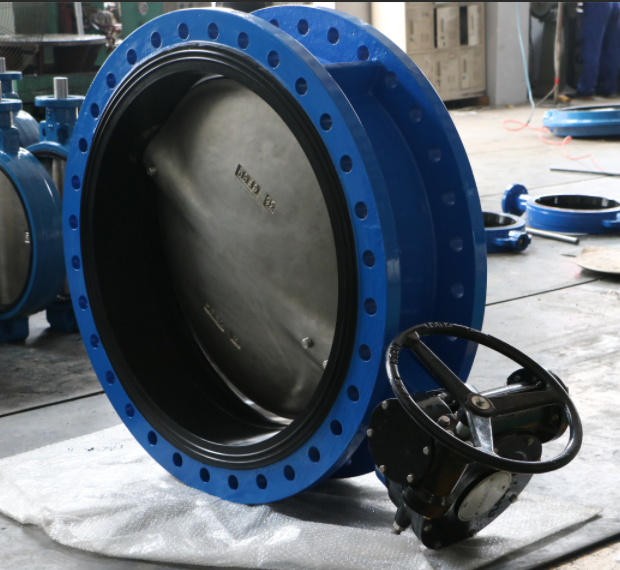
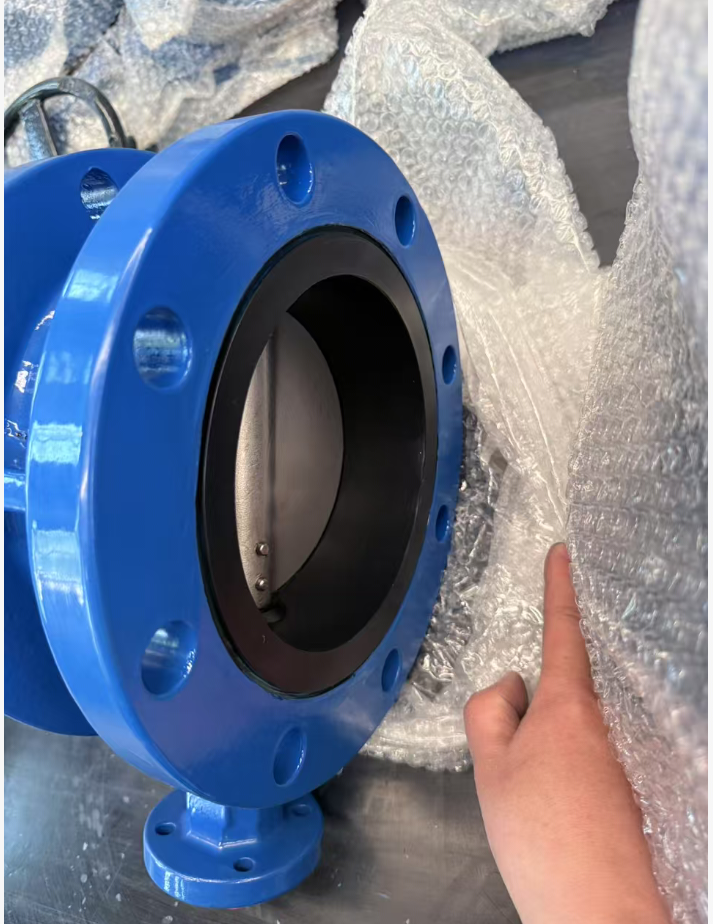
The vulcanization process is the most critical manufacturing step in producing high-quality rubber-seated butterfly valves. Unlike mechanically retained (cartridge) seats that rely on compression fit, a vulcanized seat is chemically bonded to the valve body during a high-temperature, high-pressure molding process. The rubber lining becomes integral to the metal body — it cannot shift, extrude, or blow out under pressure.
Introduction
The vulcanization process is the most critical manufacturing step in producing high-quality rubber-seated butterfly valves. Unlike mechanically retained (cartridge) seats that rely on compression fit, a vulcanized seat is chemically bonded to the valve body during a high-temperature, high-pressure molding process. The rubber lining becomes integral to the metal body — it cannot shift, extrude, or blow out under pressure.
This article provides a comprehensive technical overview of the vulcanization process for butterfly valve seats, covering both compression molding (DN50-DN600) and autoclave vulcanization (DN800-DN2000) methods, with detailed step-by-step manufacturing procedures, quality control requirements, and comparisons with non-bonded seat designs.
1. What is Valve Seat Vulcanization?
Valve seat vulcanization is a chemical bonding process in which raw elastomer (rubber) is converted into a durable, elastic sealing material while simultaneously forming a permanent chemical bond with the metal valve body. The rubber lining is molded directly onto the body interior under controlled heat, pressure, and time conditions.
The process follows design and testing standards including GB/T 12238, API 609, and AWWA C504.
2. Two Main Vulcanization Methods
2.1 Compression Molding (DN50-DN600 / 2"-24", Mainstream Method)
For small to medium diameter butterfly valves (up to DN600 / 24"), compression molding is the industry-standard vulcanization method. The valve body with pre-placed uncured rubber compound is loaded into a heated press with a matched internal mold core. Heat and pressure cure the rubber and bond it to the body in a single operation.
- Uniform thickness: The precision internal mold ensures consistent rubber thickness (typically 2.5-5 mm) across the entire bore
- Seamless lining: No joints or seams in the finished lining
- Short cycle time: 20-90 minutes depending on size
- High bond strength: Pressure and temperature are precisely controlled
2.2 Autoclave Vulcanization (DN800-DN2000 / 32"-80", Large Diameter)
For large-diameter butterfly valves, a compression molding press of sufficient size is not practical. Instead, rubber sheets are manually applied to the body interior, and the entire valve body is placed in a steam autoclave for vulcanization.
- Manual sheet layup: Multiple layers of calendered rubber sheet are hand-applied and rolled to remove trapped air
- Steam curing: Saturated steam at controlled pressure (0.15-0.3 MPa) cures the rubber
- Longer cycle: 2-6 hours depending on rubber thickness and compound
- Suitable for complex geometries: Accommodates large, heavy valve bodies that cannot fit in a compression press
3. Complete Step-by-Step Manufacturing Process (Compression Molding)
Step 1: Valve Body Machining (Pre-Vulcanization Preparation)
The cast or fabricated double flange valve body undergoes precision machining before vulcanization:
- Bore inner diameter, sealing ring surfaces, and stem bore are machined to drawing tolerances
- Flange faces (raised face or flat face) are machined per ASME B16.5 or EN 1092-2
- All internal edges are deburred and chamfered to prevent sharp edges from cutting the rubber lining
- Dimensional inspection confirms bore diameter, concentricity, and wall thickness tolerances to ensure uniform rubber coverage (standard lining thickness: 2.5-5 mm)
Step 2: Metal Surface Preparation (Critical for Bond Strength)
Surface preparation is the single most important factor determining vulcanized bond quality. The metal surface must be clean, roughened, and chemically activated.
2.1 Degreasing & Cleaning
- Alkaline wash + ultrasonic cleaning to remove cutting oils, rust preventatives, and surface contaminants
- Hot water rinse and complete drying — zero moisture permitted
2.2 Abrasive Blasting (Grit Blasting)
- White corundum (aluminum oxide) or silica sand blasting
- Target surface roughness: Ra 40-70 μm
- Blasted surface must show uniform matte silver-gray appearance — no oil spots, mill scale, or rust visible
- Chemical bonding must be completed within 4 hours of blasting to prevent surface re-oxidation
2.3 Dust Removal
- High-pressure dry compressed air to remove all blasting dust and grit particles
- Vacuum cleaning of blind holes and internal cavities
Step 3: Adhesive Application (Primer + Tie Coat)
A two-layer chemical adhesive system is applied to the prepared metal surface to create the chemical bridge between metal and rubber:
| Layer |
Material |
Application |
Drying |
| Primer (Base Coat) |
Metal-rubber bonding primer (e.g., Chemosil 211 or equivalent) |
Thin brush or spray coat |
60-80°C for 20 min |
| Tie Coat (Cover Cement) |
Rubber-based adhesive (e.g., Chemosil 220 or equivalent) |
Two coats, each allowed to flash dry between |
50-70°C body preheat before rubber loading |
The valve body is preheated to 50-70°C before rubber loading to prevent condensation and ensure proper adhesive activation.
Step 4: Rubber Compounding and Preforming
4.1 Rubber Compound Selection
| Compound |
Temperature Range |
Applications |
| EPDM (Ethylene Propylene) |
-30°C to +120°C |
Water, wastewater, HVAC, potable water (NSF 61), ozone resistance |
| NBR (Nitrile Butadiene) |
-20°C to +80°C |
Oil-contaminated water, fuels, lubricants, mineral oils |
| FKM (Fluorocarbon / Viton) |
-20°C to +180°C |
Strong chemicals, high temperature, aggressive media |
4.2 Compounding Process
- Mixing: Raw elastomer + sulfur curing agent, accelerators, carbon black reinforcement, anti-aging agents, and processing aids are blended in an internal mixer (Banbury mixer) at controlled temperature
- Milling: The compounded rubber is passed through a two-roll mill to produce uniform sheet stock of controlled thickness matching the required lining dimension
- Cutting: Sheets are cut to the approximate body dimensions with excess allowance for flash
- Rheometer testing: A small sample is tested to determine the T90 cure curve — establishing the precise temperature, pressure, and time parameters for production vulcanization
Step 5: Material Loading and Mold Closure
- A split internal mold (precision-machined to the valve bore diameter) is coated with mold release agent
- Pre-cut rubber compound sheets are carefully placed inside the adhesive-coated valve body, with additional material at stem bore and flange corner areas to prevent underfill
- The internal mold core is inserted, and upper/lower fixture plates clamp the double flange ends to seal the mold cavity
- The complete assembly is transferred to a hydraulic compression press and the mold is closed under controlled force
Step 6: High-Temperature Compression Vulcanization
This is the core of the process where chemical crosslinking and metal bonding occur simultaneously.
Standard Process Parameters (EPDM Body Vulcanization)
| Parameter |
Value |
| Vulcanization Temperature |
155-165°C (EPDM); 170-180°C (FKM/Viton) |
| Molding Pressure |
1.0-1.5 MPa (clamp force ≥ 250 tons for DN300-DN600) |
| Cure Time (DN50-DN200) |
20-40 minutes |
| Cure Time (DN300-DN600) |
45-90 minutes |
| De-airing (Bump Breathing) |
2-3 pressure releases during first 5 min to release trapped air |
Chemical Principles
During vulcanization, two simultaneous reactions occur:
- Crosslinking: Sulfur atoms form crosslinks between adjacent rubber polymer chains, converting the soft, plastic uncured compound into a strong, elastic vulcanizate. This gives the rubber its sealing properties, compression set resistance, and mechanical strength.
- Bonding: The adhesive system undergoes a chemical reaction with both the metal surface (via the primer) and the rubber compound (via the tie coat), creating a permanent chemical bond — not merely mechanical interlocking. Peel strength typically exceeds 6 MPa, meaning the rubber will tear before the bond fails.
Step 7: Demolding, Trimming, and Post-Cure
- Controlled cooling: Pressure is gradually released, and the assembly is cooled below 80°C before demolding to prevent hot-tearing of the rubber
- Flash removal: Excess rubber (flash) at flange faces, stem bore openings, and parting lines is trimmed by hand or CNC routing. Flange sealing surfaces must be flat and clean
- Room temperature post-cure: The vulcanized valve body is aged at room temperature for 24 hours to allow residual crosslinking to complete and internal stresses to relax, improving elastic recovery and bond stability
Step 8: Quality Inspection and Testing
| Test |
Method |
Acceptance Criteria |
| Visual Inspection |
100% visual examination under good lighting |
No bubbles, cracks, delamination, voids, or foreign inclusions. Smooth, uniform surface. |
| Lining Thickness |
Ultrasonic thickness gauge, minimum 6 measurement points |
±0.3 mm tolerance from specified thickness |
| Adhesion (Bond) Strength |
Peel test per ASTM D429 or ISO 813 |
Peel strength ≥ 6 N/mm; failure mode: rubber tear (not adhesive or metal interface) |
| Hardness |
Shore A durometer |
60-75 Shore A (typical for EPDM seat) |
| Shell Hydrostatic Test |
Water pressure at 1.5x rated pressure, minimum 5 min hold |
Zero leakage through body walls or flange connections |
| Seat Leakage Test |
Water pressure at 1.1x rated pressure, disc closed |
Zero visible leakage (bubble-tight) per API 598 |
| Spark (Holiday) Test |
High-voltage spark tester at 15-20 kV/mm (for chemical service) |
No spark indication of pinholes or discontinuities |
Step 9: Final Machining and Assembly
- Stem bore rubber lining is trimmed to precise diameter for stem bushing fit
- Disc, stem, bearings, body O-rings, and operator (gear, lever, or actuator) are assembled
- Final operational test — full open-to-close cycle verifies smooth operation
- Valve is tagged with serial number, pressure rating, and test date
4. Autoclave Vulcanization for Large Diameter Valves (DN800-DN2000+)
For valves too large for compression molding, the following process applies:
- Surface preparation: Same grit blasting and adhesive application as compression molding (Steps 2-3 above)
- Manual sheet layup: Multiple layers of calendered uncured rubber sheet are hand-applied to the body interior. Each layer is rolled with a stitcher roller to eliminate trapped air between layers.
- Body sealed in autoclave: The rubber-lined valve body is placed in a steam autoclave
- Controlled steam cure: Saturated steam pressure is gradually increased: 0 → 0.15 MPa (over 20 min) → 0.3 MPa (hold 2-4 hours) → slow pressure release and cooling
- Same post-cure and inspection procedures as compression molding
5. Common Vulcanization Defects and Root Causes
| Defect |
Root Cause |
| Rubber delamination from body |
Insufficient blasting roughness (Ra < 40 μm), missed adhesive coat, surface re-oxidation before bonding (time > 4 hr), insufficient molding pressure |
| Internal bubbles / voids |
Inadequate de-airing (fewer than 2-3 bump breaths), moisture in rubber compound, rubber sheet not properly rolled during layup (autoclave method) |
| Rubber cracking |
Too-rapid cooling after vulcanization (thermal shock), excessive vulcanization temperature, insufficient carbon black reinforcement in compound |
| Seat leakage at flange |
Insufficient rubber at flange corner (starvation), uneven trim, under-cure (insufficient time at temperature) |
| Porosity in lining |
Moisture in compound, contaminated raw materials, inadequate mixing |
6. Vulcanized Seat vs Replaceable Cartridge Seat — Comparison
| Property |
Vulcanized Seat (This Process) |
Cartridge (Replaceable) Seat |
| Bonding Method |
Chemical bond – rubber crosslinks with adhesive system on metal |
Mechanical retention – liner is clamped by body geometry |
| Blowout Resistance |
Excellent – bonded seat cannot blow out |
Moderate – liner can extrude under high pressure or vacuum |
| Dead-End Service |
Fully rated – seat holds position under single-side pressure |
Derated – liner may dislodge under one-side differential |
| Vacuum Service |
Excellent – bonded lining resists vacuum pull |
Moderate – risk of liner lifting under vacuum |
| Service Life (typical) |
15-25 years (water service) |
10-15 years |
| Field Replacement |
Not possible – entire valve must be replaced |
Yes – liner can be replaced without removing valve body |
| Integral Flange Seal |
Yes – rubber extends to both flange faces |
Yes – similar design |
| Chemical/Corrosion Service |
Excellent – no media penetration between liner and body (3-5x life improvement over cartridge in corrosive service) |
Good – potential media penetration at liner-to-body interface |
7. Quality Standards Referenced
- GB/T 12238 – Chinese national standard for rubber-seated butterfly valves
- API 609 – Butterfly valves: Double-flanged, lug- and wafer-type (Category A)
- AWWA C504 – Rubber-seated butterfly valves for waterworks
- ASTM D429 – Standard test methods for rubber property – Adhesion to rigid substrates
- API 598 – Valve inspection and testing
- NSF/ANSI 61 – Drinking water system components (potable water certification)
8. Why Vulcanized Seat Valves Are Preferred for Critical Service
- High bond strength: Chemical crosslinking between rubber and metal prevents seat separation under pressure surges, water hammer, and thermal cycling
- Zero assembly gaps: No rubber-to-metal interfaces where media can penetrate or corrosion can initiate
- Low operating torque: Uniform, smooth rubber surface against the disc edge provides consistent, predictable torque over the valve lifetime
- Integrated flange sealing: The rubber lining extends to both flange faces, eliminating the need for separate pipe flange gaskets in most installations
- Corrosion barrier: The bonded rubber lining protects the metal body from media corrosion, extending valve life 3-5 times compared to unlined or mechanically lined valves in aggressive service
- Cost-effective lifecycle: While the initial cost is comparable to cartridge seat valves, the longer service life (15-25 years) and elimination of maintenance make vulcanized seat valves more economical over the full lifecycle for most water and wastewater applications
Conclusion
The vulcanization process is a sophisticated manufacturing technology that combines precision machining, chemical surface engineering, rubber compounding science, and controlled thermal processing to produce butterfly valve seats that are chemically integral to the valve body. When executed correctly — with proper surface preparation, adhesive selection, cure parameters, and quality testing — the vulcanized seat delivers unmatched reliability, longevity, and performance in water, wastewater, and industrial service.
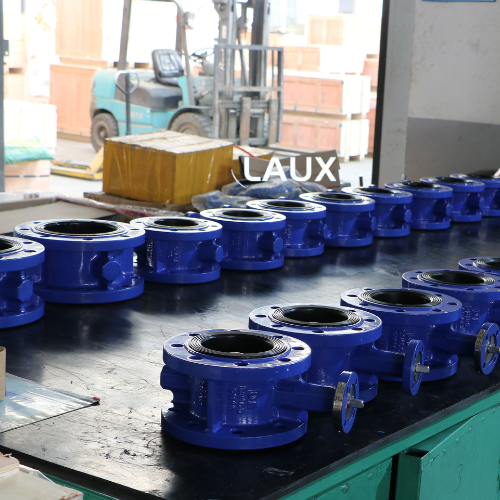
At Laux Valve, all concentric butterfly valves (wafer, lug, and double flange) are manufactured with compression-molded vulcanized EPDM seats, 100% hydrostatically and seat-tested before shipment. Contact our engineering team for technical specifications or quality documentation.
Contact Laux Valve
Email: james@lauxvalve.com | Tel: +86 18920833829 | Website: www .lauxvalve.com


